Choosing a car is undoubtedly one of the most important stages of preparing to enter the passenger transportation business. A mistake at this stage can cost a driver more than 1,000 PLN in net profit every month, money that will simply be “burned” in the fuel tank or spent on endless repairs. In the Polish market of 2026, where fuel prices remain high and Low Emission Zones (Strefy Czystego Transportu) are becoming a reality in the centers of major cities such as Warsaw and Kraków, choosing the right engine has become a matter of mathematical survival.
To avoid working “just to pay for fuel,” you need to conduct a detailed cost analysis of different vehicle types, taking into account not only the price per liter of fuel but also the depreciation rate under demanding urban driving conditions. Constant traffic jams, running the air conditioning while waiting for orders, and frequent braking quickly wear out a vehicle, while alternative powertrains can turn these idle periods into savings. By understanding the average fuel consumption of a taxi, drivers can calculate in advance the payback period and the benefits of switching to electric power, considering fuel prices vs. electricity costs in a specific voivodeship.
Below, we compare which type of vehicle—petrol, LPG, electric, or hybrid—is the most profitable choice for taxi work.

Comparison of Hybrid, Electric, LPG, and Petrol Cars
When choosing between different types of powertrains, it is important to understand the operating cost of an electric taxi vs. a petrol taxi. In Poland, taxi drivers typically cover 4,000–6,000 km per month, so even a small difference in taxi fuel costs turns into thousands of zlotys over the course of a year. A taxi cost comparison shows that the vehicle’s purchase price is only the tip of the iceberg, while the real expenses should be calculated based on the cost per kilometer.
Below is a detailed comparison of hybrid vs. petrol taxi fuel consumption, as well as the economic performance of electric vehicles and LPG.
| Comparison Parameter | Petrol (1.4/1.6) | LPG (Autogas) | Hybrid (HEV) | Electric (EV) |
|---|---|---|---|---|
| Fuel vs. Electricity | ~6.50 PLN/L | ~2.95 PLN/L | ~6.50 PLN/L | 0.45–2.60 PLN/kWh |
| City Consumption | 9–11 L / 100 km | 11–13 L / 100 km | 3.8–4.8 L / 100 km | 15–18 kWh / 100 km |
| Cost per 100 km | ~65.00 PLN | ~35.00 PLN | ~28.00 PLN | ~8.00–45.00 PLN |
| Maintenance (Service) | Regular | Highest | Minimal | Almost none |
| Braking System | High wear | Medium wear | Low wear | Regenerative braking |
| Monthly Expenses (5,000 km) | ~3,250 PLN | ~1,750 PLN | ~1,400 PLN | ~400–2,250 PLN* |
* The minimum figure represents home charging costs, while the maximum reflects charging exclusively at fast public charging stations.
Regardless of which type of powertrain you choose, proper cost optimization and regular maintenance are only half the battle. To turn savings at the pump into real profit, it is equally important to have reliable support with documentation and legal compliance. Promin Partner provides drivers with the best conditions for connecting to ride-hailing platforms, along with comprehensive informational support—from helping you choose a specific car model to professional accounting services.
Connect to Uber
Learn about Promin Partner's cooperation terms and start earning more with transparent statistics and stable payouts
Is It Better to Drive a Petrol, Hybrid, Electric, or LPG Taxi?
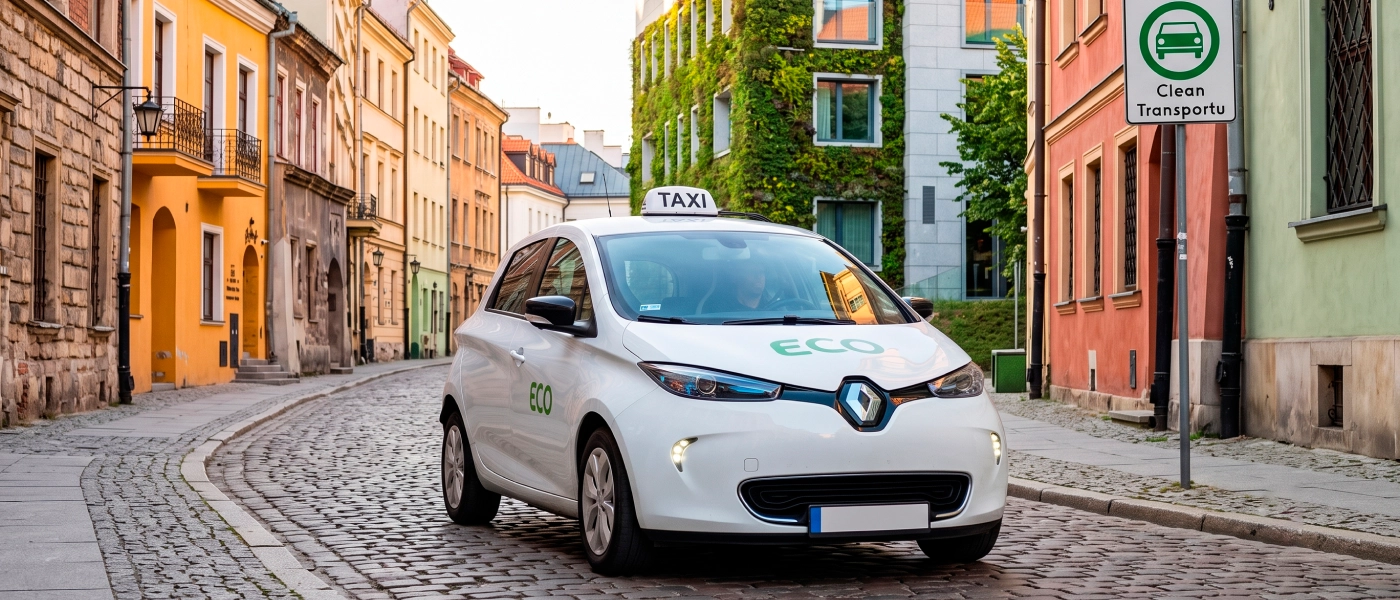
An analysis of the Polish passenger transportation market shows that the hybrid is the most versatile option and the “golden mean” for any major city. Its greatest advantage is that it does not require drivers to change their lifestyle: there is no need to search for charging stations, while fuel consumption remains exceptionally low even in the traffic jams of Warsaw or Wrocław. It is the best choice for those who value reliability and strong resale value. When comparing electric taxi costs vs. hybrid taxi costs, many drivers choose the hybrid because it eliminates charging downtime.
Which is more profitable for taxi work: an electric vehicle or a hybrid? The answer depends on your access to charging infrastructure. An electric vehicle offers maximum savings and can turn taxi driving into a highly profitable business, but only if you have access to low-cost charging. In this case, your profits can increase by 30–40%. However, keep in mind that operating an electric taxi requires careful shift planning, especially during winter, when electric vehicle energy consumption increases due to cabin heating.
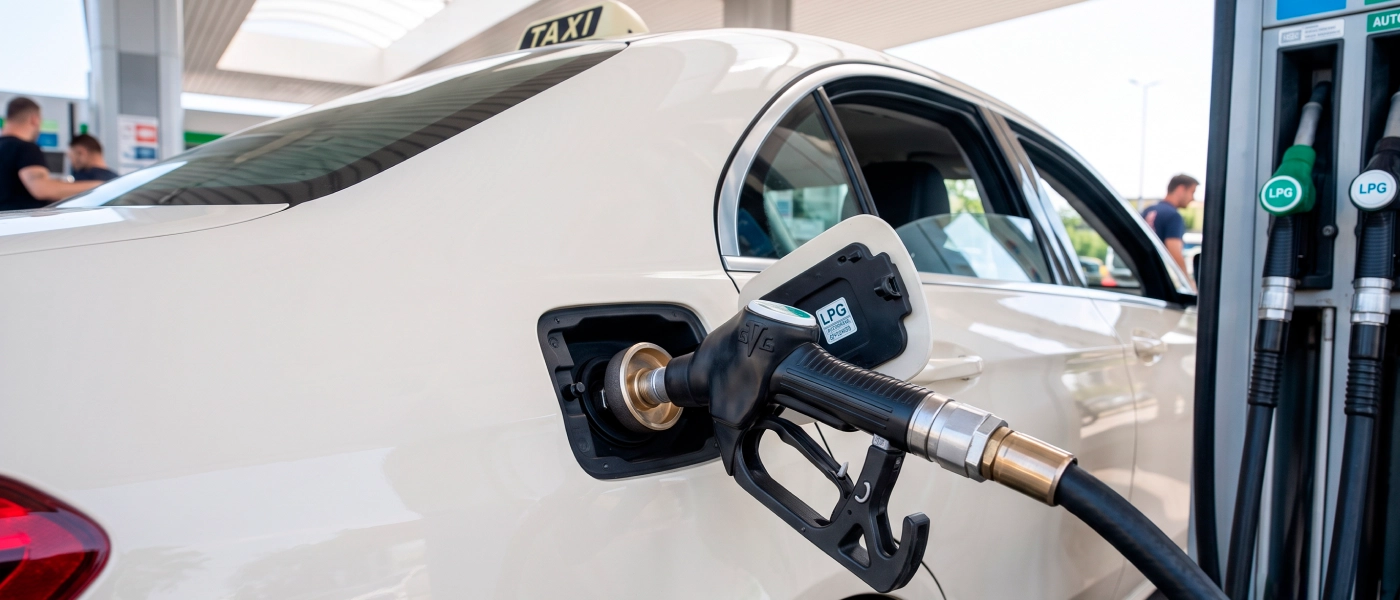
LPG remains the “people’s choice.” It is cheaper than petrol but requires greater attention to maintenance: frequent repair costs show that LPG equipment requires proper adjustment and cylinder head maintenance. Nevertheless, it remains the most affordable way to enter the profession.
A petrol-only vehicle is the least favorable option. High fuel prices make it unprofitable. You may spend up to 60% of your revenue on fuel. Which is cheaper for taxi work: electric or petrol? Without question, electric is the better choice when considering a period longer than one year.
Connect to Bolt
Learn about Promin Partner's cooperation terms and start earning more with transparent statistics and stable payouts
FAQs About Choosing Between Different Vehicle Powertrains
Is an Electric Vehicle Profitable for Taxi Work?
Yes, if you have access to charging. Electricity prices under a residential tariff (around 0.60 PLN per kWh) make the cost per kilometer almost negligible. When calculating the payback period of an electric taxi, we see that the higher purchase price is typically offset within 1.5–2 years, thanks to the absence of engine oil, combustion engine filters, and spark plugs. How much does an electric taxi save? At a monthly mileage of 5,000 km, savings can reach 2,500 PLN per month compared to a petrol vehicle.
Are Hybrid Cars Profitable for Taxi Work?
Absolutely. Hybrid taxi savings are especially noticeable in heavy traffic. The real advantages of a hybrid are the durability of its components and low depreciation. You do not waste time charging while maintaining fuel consumption at around 4 liters per 100 km. For anyone looking for how to reduce taxi operating costs, a hybrid is the safest investment.
Is It Worth Switching to an Electric Taxi?
Is it worth switching to an electric vehicle for taxi work? Yes, if your daily mileage fits within the electric vehicle’s range on a single charge (300–350 km) and you have access to low-cost charging. It is also important to consider the electric vehicle battery lifespan, which in modern models such as Tesla, Kia, and Hyundai ranges from 300,000 to 500,000 km.
Is It Profitable to Work as a Taxi Driver With a Petrol Car?
In most cases, no. High monthly fuel expenses make a conventional petrol engine the least competitive option. It is only justified as a temporary solution for part-time work. To maximize cost optimization while working as a taxi driver, an LPG system should be installed in a petrol car. If you need advice on taxi operating costs, experts will always point out the inefficiency of petrol engines in urban driving conditions.
Stay informed
We break down complex topics in simple language and share insights and news. Subscribe so you don't miss a thing.

Subscribe